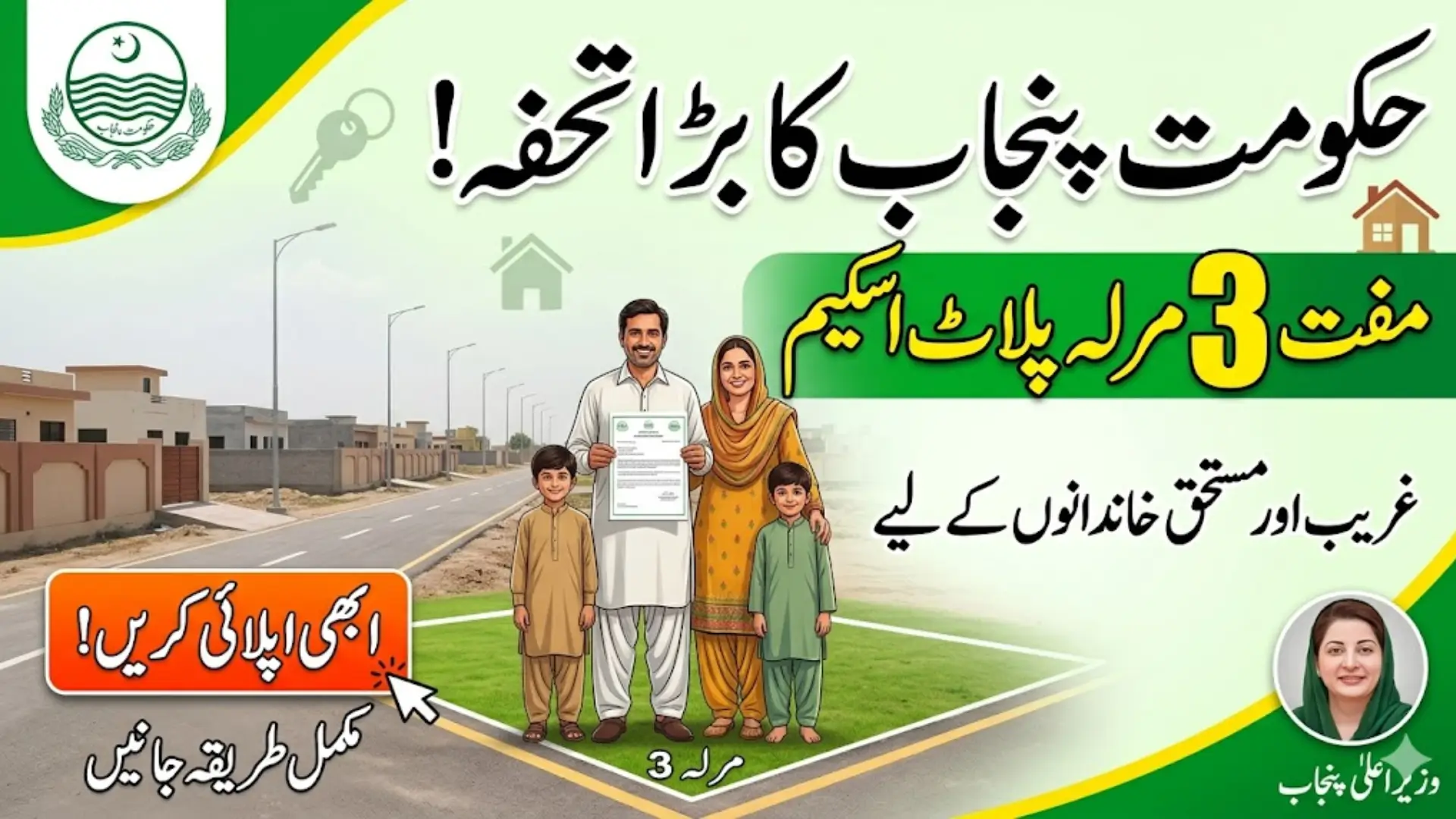
Punjab Launches Free 3 Marla Housing Scheme
Punjab Launches Free 3 Marla Housing Scheme: Government of Punjab has taken a major step toward addressing the growing housing shortage by introducing the Free 3 Marla Housing Scheme 2026. This initiative is designed to support low-income families who have long struggled to own a piece of land or a secure home. With rising property prices and increasing urban migration, the dream of owning a house has become difficult for many, especially daily wage earners and small-income households.
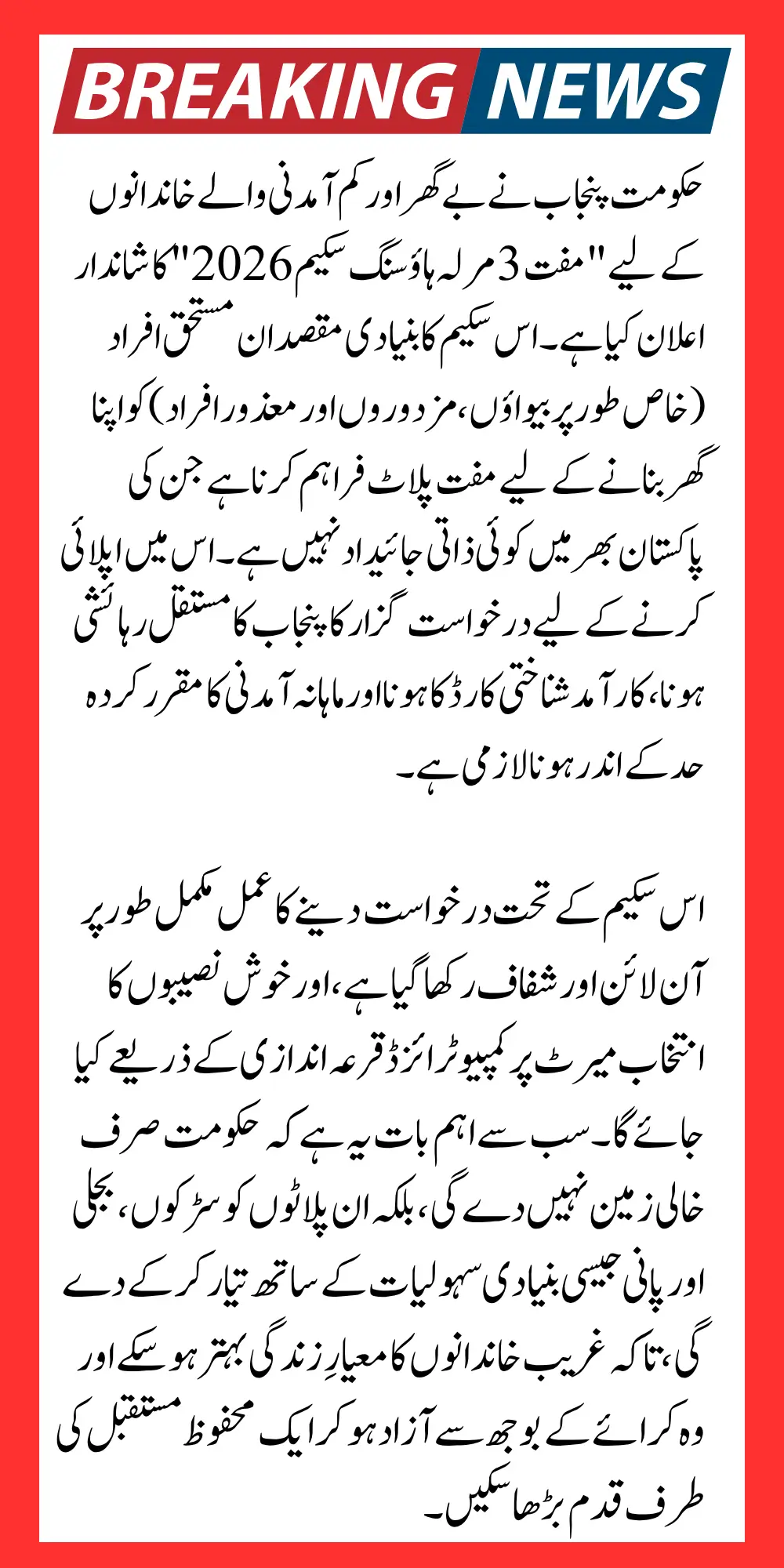
This scheme reflects a broader vision of improving living standards across the province by ensuring that shelter is accessible to deserving citizens. Instead of offering partial subsidies or loans, the program focuses on providing free residential plots, making it a unique opportunity for families that cannot afford traditional housing options. It also aims to reduce informal settlements and improve urban planning by offering properly developed plots.
You Can Also Read: Big News for Students Punjab Announces Final School Schedule Ahead of Reopening
| Scheme Overview: Free 3 Marla Housing 2026 | |
|---|---|
| Plot Size | 3 Marla (Residential) |
| Target Group | Low-income families, Widows, Laborers, and Disabled persons |
| Eligibility | Punjab residents with no existing property ownership |
| Infrastructure | Roads, Water, Electricity, and Sanitation provided |
| Apply Mode | Online via Official Punjab Housing Portal |
| Required Documents | CNIC, Income Proof, Residence Proof, Affidavit |
| Selection | Transparent Computerized Balloting |
| Cost | 100% Free (No partial loans or subsidies) |
Key Benefits of Free 3 Marla Plot Scheme
The scheme brings several advantages that make it highly attractive for eligible applicants. It is not just about land ownership but about providing a better lifestyle and long-term stability for families. The government plans to develop these plots with basic infrastructure such as roads, electricity, and water supply to ensure livable conditions.
Another major benefit is that the program prioritizes transparency and fairness. The allocation process is expected to be merit-based, ensuring that only deserving individuals receive the benefit. This reduces the chances of misuse and increases public trust in the initiative.
How to Apply for Punjab Free 3 Marla Housing Scheme 2026
- Go to the official Punjab Housing Scheme online portal when launched
- Register an account using your CNIC number and active mobile number
- Fill in basic personal details like name, address, and family information
- Provide income details and confirm eligibility information
- Upload required documents such as CNIC and residence proof
- Submit the completed application form online
- Save tracking ID to check application status later
You Can Also Read: Bewa Sahara Card Registration 2026 & 150000 Rupees Online Check Eligibility
Who Can Apply for Punjab Housing Scheme 2026
The eligibility criteria for this scheme have been designed to target the most deserving segments of society. The government wants to ensure that the benefit reaches those who genuinely need housing support rather than individuals who already own property or have sufficient financial resources.
Applicants must belong to low-income groups and should not have ownership of any residential property anywhere in Pakistan. Preference may be given to widows, laborers, disabled individuals, and families living in rented or temporary accommodations. The scheme is expected to cover both urban and rural populations, making it inclusive and wide-reaching.
Free Plot Scheme Application Process Explained
Applying for the Free 3 Marla Housing Scheme 2026 is expected to be simple and accessible. The government is likely to introduce a digital application system to ensure ease and transparency. Applicants will need to provide their personal details, income information, and supporting documents to verify their eligibility.
The online system will help reduce paperwork and eliminate the need for physical visits to offices. Once the applications are submitted, authorities will review them carefully before shortlisting candidates. Successful applicants may be selected through a computerized balloting process to maintain fairness.
You Can Also Read: CM Punjab Laptop Scheme 2026 Online Apply Check Final Date For Request
Development Plan and Infrastructure Facilities
One of the standout features of this housing scheme is the focus on proper development. Instead of distributing undeveloped land, the government aims to provide plots within planned communities. This includes access to essential facilities such as clean water, sanitation systems, paved roads, and electricity connections.
Additionally, future plans may include schools, healthcare centers, and public transport options near these housing areas. This ensures that beneficiaries not only receive land but also have access to a functional and comfortable living environment. Such development contributes to long-term community growth and improves overall quality of life.
Important Applying Criteria for Free 3 Marla Housing Scheme
- Applicant must be a permanent resident of Punjab
- Must belong to a low-income or financially weak household
- Should not own any residential property or plot
- Valid CNIC is required for application submission
- Monthly income must fall within the defined eligibility range
- Preference may be given to widows, disabled persons, and laborers
- Applicant must provide accurate and verifiable information
- Only one application per family will be accepted
- Government employees of higher grades may not be eligible
- Applicants must agree to scheme terms and conditions
You Can Also Read: Full Account Setup Guide For MKB Portal 2026 Know Application Method
Impact on Low-Income Families in Punjab
The Free 3 Marla Housing Scheme 2026 is expected to bring a significant positive impact on thousands of families. For many, this will be the first step toward financial stability and social security. Owning a home reduces the burden of rent and provides a sense of dignity and independence.
Moreover, this initiative can help reduce poverty by allowing families to invest their savings in other essential needs such as education and healthcare. It also creates opportunities for small-scale construction and related industries, indirectly boosting the local economy.
Required Documents for Application Submission
- Copy of valid CNIC
- Proof of income or salary slip
- Family registration certificate
- Utility bill or residence proof
- Disability certificate (if applicable)
- Widow certificate (if applicable)
- Affidavit confirming no property ownership
Expected Timeline and Balloting Process
- Announcement and launch of the scheme
- Opening of online application portal
- Submission of applications within given deadline
- Verification and scrutiny of applicant data
- Shortlisting of eligible candidates
- Transparent computerized balloting
- Final list of successful applicants announced
You Can Also Read: Online Registration For CM Punjab Rehmat Card 2026 Widow & Children
Future Expansion and Government Vision
The Punjab government is expected to expand this housing initiative if it proves successful. Future phases may include more plots, improved facilities, and even housing construction support for beneficiaries. This long-term vision aims to eliminate homelessness and provide affordable housing solutions across the province.
By introducing such welfare-driven projects, the government is working toward reducing inequality and improving living conditions for marginalized communities. The Free 3 Marla Housing Scheme 2026 could serve as a model for similar initiatives in other regions of the country.
Conclusion
Punjab Free 3 Marla Housing Scheme is a major opportunity for low-income families to secure their future through homeownership. With its focus on fairness, transparency, and proper development, the initiative stands out as a practical solution to housing challenges in the province. By offering free plots and ensuring essential facilities, the government is taking a meaningful step toward social welfare and economic stability.